
How to Get Audiences to Try a New Immersive Experience
Convincing someone to try something they have never experienced before is a specific marketing challenge. Convincing them to try something they cannot be shown, that requires a meaningful financial commitment, and that involves negotiating with other people before they can book, is a harder version of that challenge.
That is the task facing anyone marketing a new immersive experience to a first-time audience.
It is a challenge that sits at the intersection of consumer psychology, campaign strategy and creative communication. And it is one that most general marketing training prepares you for poorly, because the frameworks it teaches assume a product that can be demonstrated, a purchase that is individual and rational, and a conversion funnel that follows a predictable linear path.
None of those assumptions hold for immersive experience marketing.
This guide is for marketing and sales professionals in the experience economy who want to develop the specific skills and strategies that convert first-time buyers for immersive experiences. It covers the psychology of the decision, the campaign approaches that work, the creative skills that make the difference and the common mistakes that cost productions their new audience before they have had the chance to build one.
WHY CONVERTING FIRST-TIME BUYERS IS STRUCTURALLY HARDER FOR IMMERSIVE EXPERIENCES
Every live experience faces a version of the first-time buyer challenge. A theatre production needs to convince people who have not seen that show before. A festival needs to sell tickets to people who have not attended that specific event.
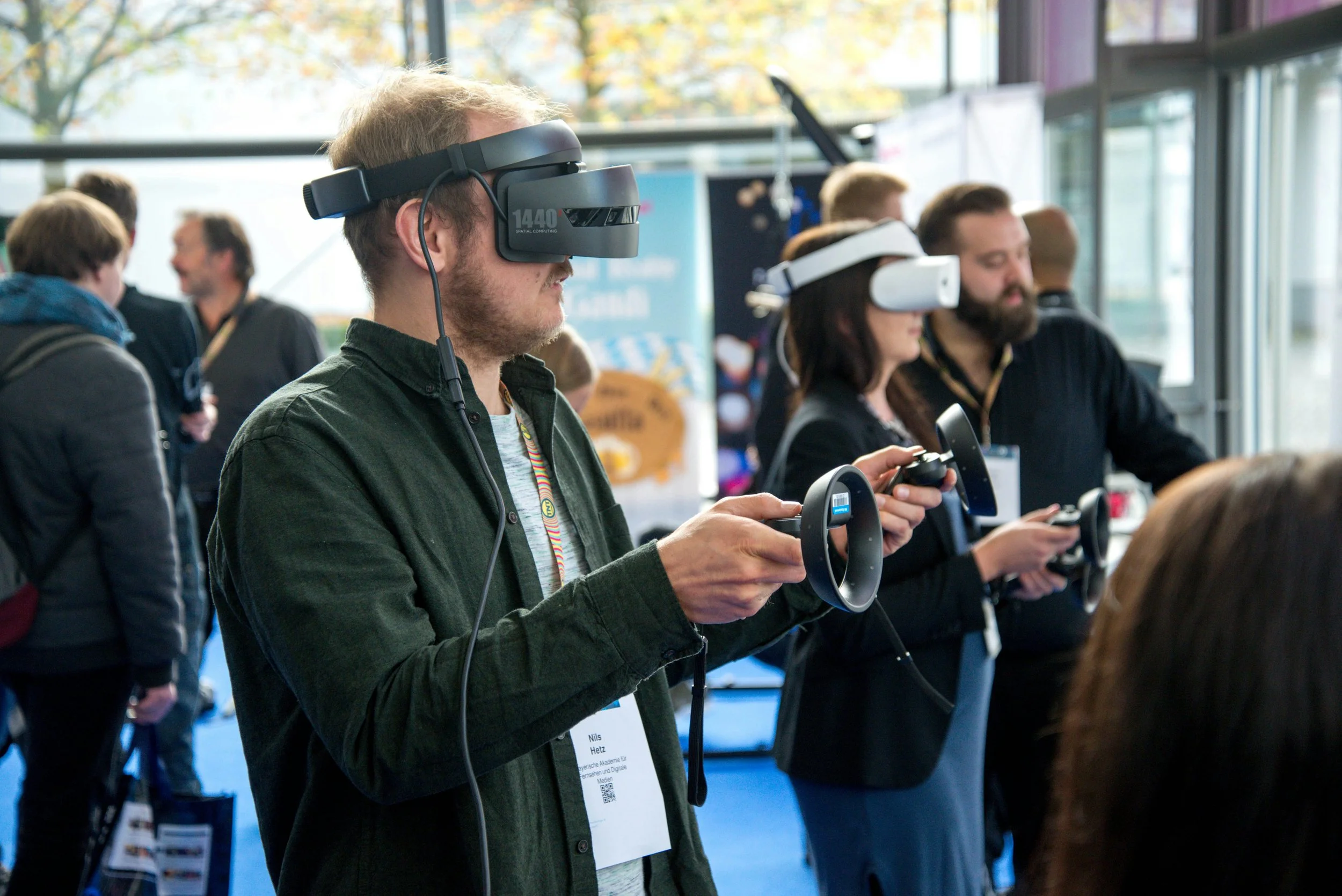
Immersive experiences face a compounded version of this challenge because there is an additional layer of unfamiliarity. It is not just that the person has not attended this specific experience. They may never have attended any immersive experience. They are being asked to commit to a format, not just a production.
Understanding the specific barriers this creates is the starting point for developing the skills to overcome them.
THE DEMONSTRATION PROBLEM
Most entertainment marketing works by showing people what they are buying. A film trailer shows you the world, the characters, the tone. A concert announcement shows you the artist and references previous performances the potential buyer has seen or heard about. A theatre production can share production photographs, cast announcements and critic quotes that communicate quality and character.
Immersive experiences cannot do this effectively. Showing the inside of the experience before the audience enters it undermines the very thing that makes the experience valuable. You cannot demonstrate the feeling of being inside the world without destroying it.
This means the marketing must sell the experience without showing it. That requires a specific creative skill: communicating emotional outcomes rather than product features, atmosphere rather than content, possibility rather than proof.
THE UNFAMILIARITY RISK
For a genuine first-time buyer, the unfamiliarity of the format creates a specific kind of anxiety that is different from the normal hesitation around any purchase. It is not just the risk of not enjoying the experience. It is the deeper uncertainty of not knowing how to behave, what will be expected of them, whether they will feel comfortable, whether they will understand what is happening.
This unfamiliarity anxiety is a real commercial barrier. It is also a surmountable one. But surmounting it requires understanding it, which means developing genuine insight into what first-time immersive buyers are actually worried about, rather than assuming they share the enthusiasm of an audience that already knows the format.
THE SOCIAL NEGOTIATION BARRIER
Immersive experience tickets are almost never bought by one person acting alone. The decision to attend involves other people: a partner, a group of friends, a family. The potential buyer who is most interested in the experience has to persuade the others before they can commit.
This social negotiation layer lengthens the consideration window, introduces additional points of resistance, and means the marketing must reach and persuade multiple people, not just the individual who first encounters the campaign.
Understanding this social dimension is a skill that changes how campaign strategy is built. It affects which channels you prioritise, what creative approach you use, how you sequence your communications and what you make easy to share.
THE PSYCHOLOGY OF THE FIRST-TIME IMMERSIVE EXPERIENCE BUYER
Developing marketing skills that convert first-time buyers requires genuine understanding of the psychological journey those buyers go through. This is not generic consumer psychology. It is specific to the immersive format and the decisions it requires.
THE TRUST GAP
The first-time immersive buyer is being asked to trust something they cannot verify. They cannot read a script, watch a trailer or reference previous experience of the format to calibrate their expectations. They are relying almost entirely on what other people tell them, on the credibility of the people who recommend the experience and on the signals they read from the marketing itself.
This means trust is not a supplementary marketing goal for immersive experiences. It is the primary one. Everything in your marketing is either building or eroding the trust that a first-time buyer needs to make the decision to attend. The quality of the creative communicates trust. The clarity of the information communicates trust. The accessibility of the booking journey communicates trust. And the presence of authentic social proof, real people describing their genuine experience, communicates trust more powerfully than anything the producer can say directly.
IDENTITY AND SOCIAL SIGNALING
Attending an immersive experience says something about who you are. It signals curiosity, openness to new experiences, a certain kind of cultural engagement. For some first-time buyers, this identity signal is part of the attraction. For others, it is a source of uncertainty. Am I the kind of person who does this? Will my friends think this is a good idea?
Marketing that speaks to identity rather than just to content reaches first-time buyers at a deeper level than marketing that describes the experience in functional terms. The question is not just what is this? but who is this for? And the most effective immersive experience marketing answers that question in a way that makes the potential first-time buyer feel that the experience is made for people like them.
THE PERMISSION TO NOT UNDERSTAND
One of the most consistently underappreciated barriers to first-time immersive attendance is the fear of not knowing what to do when they get there. Will there be instructions? What if I miss something? What if I go the wrong way? What if I do not engage correctly?
These questions are rarely asked out loud but they are present in the minds of a significant proportion of first-time buyers. Marketing that acknowledges and addresses them, that gives potential audiences explicit permission to experience the work in their own way and reassurance that there is no wrong way to attend, removes a barrier that most campaigns do not even know is there.
This is a craft skill as much as a strategy skill. It requires knowing how to weave reassurance into copy and creative in a way that does not undermine the mystery and excitement that makes the experience attractive in the first place.
THE VALUE CALCULATION
The first-time immersive buyer is making a value calculation without a reference point. They do not know what attending this kind of experience feels like, which means they cannot assess whether the ticket price is proportionate to the experience they will have.
Effective marketing helps first-time buyers make that calculation confidently. It does not do this by explaining the production values or the creative concept. It does it by communicating, through every element of the campaign, that the experience is worth more than the price being asked for it. The quality signal in the creative. The credibility of the social proof. The specificity of the emotional outcomes described by people who have attended. All of these are value communication, even when they look like brand building.
CAMPAIGN STRATEGIES THAT CONSISTENTLY WORK FOR FIRST-BUYER CONVERSION
SEED THE RIGHT COMMUNITIES BEFORE ON SALE
The most commercially effective first-time buyer acquisition for immersive experiences happens through community, not through advertising. The people most likely to attend an immersive experience for the first time are those who are connected to someone who has already attended.
This means the pre-on-sale period is not just a demand-building exercise. It is an audience seeding exercise. Getting the right early attendees, the culturally engaged, socially connected people who will share their experience within the networks most likely to generate first-time buyers, is a strategic decision that shapes commercial performance across the full run.
Who gets priority access before general on sale? Who are you inviting to press nights and preview performances? Which communities are you seeding before you open the booking window? These are strategic decisions with measurable commercial consequences, not just PR gestures.
MAKE WORD OF MOUTH EASY AND SPECIFIC
Word of mouth is the most powerful first-time buyer conversion tool available for immersive experiences. The challenge is that authentic word of mouth is not fully within a marketer's control. What is within your control is whether you make it easy and whether you give people the vocabulary to describe what they experienced.
The post-attendance communication strategy is where this happens. What do you send to an attendee the morning after? How do you acknowledge what they experienced without describing it to people who have not yet been? What do you give them that makes it easy to share with the people in their lives who are potential first-time buyers?
This is a skill that most experience economy marketing training does not cover in adequate depth. It requires understanding the emotional state of someone who has just attended an immersive experience, what they want to tell people about it and what format makes that telling easiest.
USE PROXY EXPERIENCES TO MANAGE UNFAMILIARITY ANXIETY
For first-time buyers, the unknown quality of the experience is a barrier. One of the most effective ways to lower that barrier is through proxy experiences: content that gives potential buyers a sense of what attending feels like without revealing the experience itself.
This is not a trailer. It is not a behind-the-scenes video. It is content that communicates atmosphere, emotional register and what the experience of being in the room is like, without showing the room. A fifteen-second clip of an audience member's face as they encounter something unexpected. Audio that carries the sonic world of the experience. A written piece from an attendee that describes, in their own words, what they felt rather than what they saw.
Learning to commission and curate this kind of content is a specific creative skill. It requires a clear understanding of what the first-time buyer's primary anxiety is and what kind of proxy experience most directly addresses it.
SEQUENCE COMMUNICATIONS FOR THE SOCIAL NEGOTIATION
Because the immersive experience purchase decision is social, campaign communications should be sequenced with the social negotiation in mind, not just with the individual buyer's decision journey.
This means creating content that is easy to forward, to share, to use in the conversation someone is having with their partner or their group of friends about whether to book. It means thinking about what the person who is most enthusiastic about the experience needs in order to persuade the people in their life who are less certain.
A frequently overlooked tactic is creating content that directly addresses the most resistant person in the group. The partner who is unconvinced, the friend who is nervous about the format. Marketing that speaks to that person's specific hesitation, without requiring the enthusiast to translate, makes the social negotiation easier and shortens the consideration window.
TIME FIRST REVIEW WAVE DELIBERATELY
For new immersive experiences, the first wave of genuine audience reviews is a first-time buyer conversion event. The moment when potential buyers can read authentic descriptions from real people who attended is often the tipping point that converts consideration into booking.
Understanding this, and planning the campaign communication calendar around it, is a strategic skill. When are reviews likely to appear? How can you amplify authentic positive responses without compromising their credibility? How can you direct potential first-time buyers toward audience responses at the moment when they are most likely to be in a consideration mindset?
In an AI-driven search environment, this has taken on additional commercial significance. AI search responses to queries like best new immersive experiences in London are increasingly surfacing audience reviews as primary evidence. The quantity, quality and specificity of authentic audience responses is now a discovery asset as much as a conversion asset.
THE CREATIVE SKILLS THAT MAKE THE DIFFERENCE
Strategy without execution is a plan. The creative skills that bring first-time buyer conversion strategies to life are specific and learnable. They are also rarely taught in general marketing education.
WRITING ABOUT FEELING RATHER THAN CONTENT
The fundamental creative challenge of immersive experience marketing is that the content cannot be described without destroying it. The marketer has to sell the experience using only the emotional outcomes it produces.
This requires a specific copywriting skill: naming feelings with enough specificity to be credible without being so specific that they apply only to people who have already had the experience. The difference between a line that lands for a first-time buyer and one that only resonates with repeat attenders is often a single word or a specific detail that is either universal or exclusive.
Developing this skill requires practice, feedback and a genuine commitment to understanding the audience's emotional starting point rather than the producer's creative intentions. What does a first-time buyer feel before they attend? What do they hope to feel? What are they afraid of feeling? The best immersive experience marketing copy starts from those questions rather than from a description of the experience itself.
BUILDING ATMOSTPHERE WITHOUT REVELATION
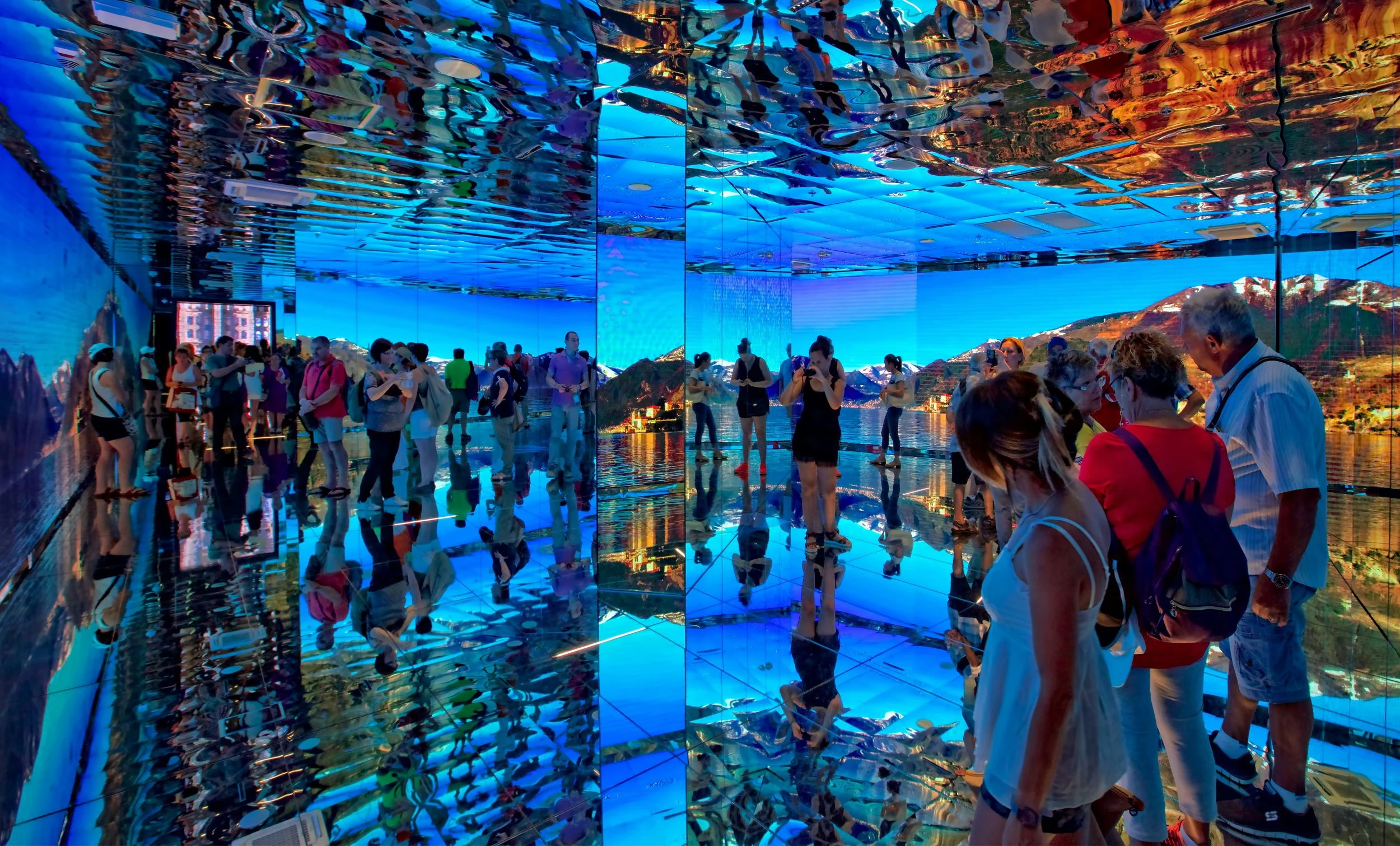
Visual and audio creative for immersive experiences has to create atmosphere, intrigue and desire without showing the experience or explaining the concept. This is a creative constraint that, handled well, becomes an advantage. Mystery is more compelling than clarity for audiences who are genuinely curious about an experience they cannot fully picture.
The creative skill is in knowing what to show and what to withhold. The edge of the world. The light before the reveal. The sound that suggests a space without defining it. Learning to brief and evaluate this kind of creative, and to judge whether it is doing the job of building atmospheric desire in a first-time buyer rather than simply looking interesting, is a capability that develops with deliberate practice.
SOCIAL PROOF THAT IS SPECIFIC ENOUGH TO BE TRUSTWORTHY
Generic positive reviews do not convert first-time buyers. Five stars and brilliant are not sufficient evidence for someone considering spending forty pounds on an experience they cannot picture.
The social proof that converts first-time buyers is specific, emotional and surprising. It names something the reviewer did not expect to feel. It describes a specific moment without revealing it. It comes from someone whose relationship to the format the potential buyer can recognise as similar to their own.
Learning to identify, curate and deploy this kind of social proof, and to integrate it into campaign communications at the moments when it will have the most effect, is a skill that has a direct commercial impact on first-time buyer conversion rates.
MEASURING AND IMPROVING FIRST-TIME BUYER CONVERSION
Developing skills in first-time buyer conversion requires the ability to measure whether your strategies are working. This is an area where immersive experience marketing often lacks rigour, partly because the measurement infrastructure is not always in place and partly because the metrics that matter most are not always the easiest to track.
THE METRICS THAT ACTUALLY TELL YOU SOMETHING
Standard campaign metrics, reach, click-through rate, cost per click, tell you about campaign delivery rather than first-time buyer conversion. The metrics that give you genuine intelligence on how well you are converting first-time audiences include:
New versus returning booker ratio across the booking window. Are the people buying tickets in the first two weeks primarily people who have attended your experiences before, or are you successfully reaching new audiences? This ratio, tracked over time, tells you whether your acquisition strategy is working or whether you are primarily selling to your existing community.
Party size and group composition data. Are people booking in groups that suggest social decision-making? Large party sizes in the early booking period often indicate strong word of mouth and effective social seeding. Single ticket bookings suggest a different audience profile and a different marketing challenge.
Booking source attribution for first-time buyers specifically. Where are new bookers coming from? If you can identify the channel or the specific piece of content that is driving first-time buyer conversion, you can invest more in what is working and less in what is not.
Pre-visit communication open and engagement rates. Are the people who booked but have not yet attended engaging with your pre-visit communications? Disengagement between booking and attendance is a risk factor for no-shows and for a lower quality of experience that reduces word of mouth.
Post-visit sharing behaviour. Are attendees sharing their experience in ways that reach potential first-time buyers? This is harder to measure precisely but it is the ultimate commercial output of a successful first-time buyer conversion strategy.
BUILDING ATEST AND LEARN CULTURE
First-time buyer conversion is not a problem that gets solved once. It is an ongoing marketing challenge that requires continuous testing, reading and improvement. The campaigns that consistently outperform are those run by marketers who treat each production as a learning opportunity and who carry what they learn forward.What creative approach generated the most first-time buyer conversions in this run? What community seeding worked better than expected? What social proof format produced the most sharing? Documenting and sharing these learnings, within your team and within the broader professional community, accelerates improvement across the sector. The On Sale Live confex is where much of this kind of peer learning happens in practice, with practitioners from across the experience economy comparing approaches and sharing what is working in real time.
WHERE THESE SKILLS FIT IN YOUR PROFESSIONAL DEVELOPMENT
The skills covered in this guide sit at a specific level of the experience economy marketing curriculum. They build on foundations in digital marketing, campaign management and consumer behaviour. They connect to more advanced capabilities in audience development, commercial strategy and brand building.
For marketing and sales managers in the experience economy who are developing their expertise, first-time buyer conversion for immersive experiences is a useful lens because it brings together several disciplines that are taught separately in general marketing education but that must work together in practice.
Consumer psychology. Creative communication. Campaign sequencing. Social proof strategy. Data measurement. Word of mouth design. All of these skills are required simultaneously, and developing genuine competence in each of them, in the specific context of the experience economy, is what distinguishes strong immersive experience marketers from those who are applying general frameworks to a specific problem they do not quite fit.
The GIEM masterclass is built around exactly this kind of integrated, sector-specific skill development. The curriculum covers audience psychology, on sale strategy, commercial frameworks, digital skills and creative communication, all in the context of ticketed experiences and with a peer cohort drawn from the experience economy. It is the most direct route to developing the specific capabilities that this kind of marketing challenge requires. Full details of the curriculum and upcoming cohorts at theGIEM.com.
For a broader view of the strategic and consultancy thinking that connects first-time buyer acquisition to long-term audience development, dawnfarrow.com is where that conversation starts. Dawn Farrow's work sits at the intersection of commercial strategy and audience development for experience economy businesses, and her thinking on the relationship between new audience acquisition and sustainable revenue growth is directly relevant to anyone working on this challenge.
FURTHER RESOURCES
For a rigorous grounding in the consumer psychology that underpins first-time buyer behaviour, BehaviourWorks Australia publishes accessible, evidence-based research on behaviour change and decision-making that is directly applicable to audience acquisition challenges in the experience economy. Their work on how people make decisions under uncertainty, how social influence operates in purchasing behaviour, and how trust is built and broken in consumer contexts provides a strong theoretical foundation for the practical strategies in this guide.
For current thinking on how word of mouth and social proof operate in live experience and cultural contexts specifically, The Audience Agency produces research and tools on cultural audience behaviour that is directly relevant to anyone developing first-time buyer conversion strategies for immersive experiences. Their audience spectrum data and research on how different audience segments engage with cultural experiences for the first time provides the kind of specific, sector-relevant insight that general consumer research cannot.
WHAT THIS COMES DOWN TO
Getting audiences to try a new immersive experience is one of the most genuinely difficult marketing challenges in the experience economy. It requires selling something that cannot be shown, to a buyer who may never have experienced the format before, through a social decision process that involves more than one person and takes longer than most marketing plans account for.
The marketers who do this well are not those with the largest budgets or the most sophisticated channel mix. They are those who understand the psychology of the first-time buyer at a specific and detailed level, who have developed the creative skills to communicate emotional outcomes rather than product features, and who have built the campaign discipline to design for word of mouth from day one rather than hoping it arrives.
These are learnable skills. They require the right framework, the right peer community and enough deliberate practice to move from knowing the principles to being able to apply them under commercial pressure.
That is what the GIEM is built to develop. Not just knowledge about the experience economy, but the specific capabilities that allow experience economy marketing professionals to perform better in their actual jobs.
If you are working on a first-time buyer conversion challenge for an immersive experience, or if you want to develop the skills to handle it more effectively, the GIEM masterclass is the most direct route to both. Full details at theGIEM.com.
Written and published by Dawn Farrow’
BUILD YOUR EXPERIENCE ECONOMY MARKETING SKILLS
The GIEM masterclass covers audience psychology, on sale strategy, creative communication, commercial frameworks and digital skills, all taught in the context of ticketed experiences with a peer cohort from across the experience economy. Details and upcoming cohorts at theGIEM.com.
For strategic consultancy on audience development and first-time buyer acquisition in the experience economy: dawnfarrow.com.
For the experience economy's annual marketing and ticketing confex: On Sale Live at onsale.live.